
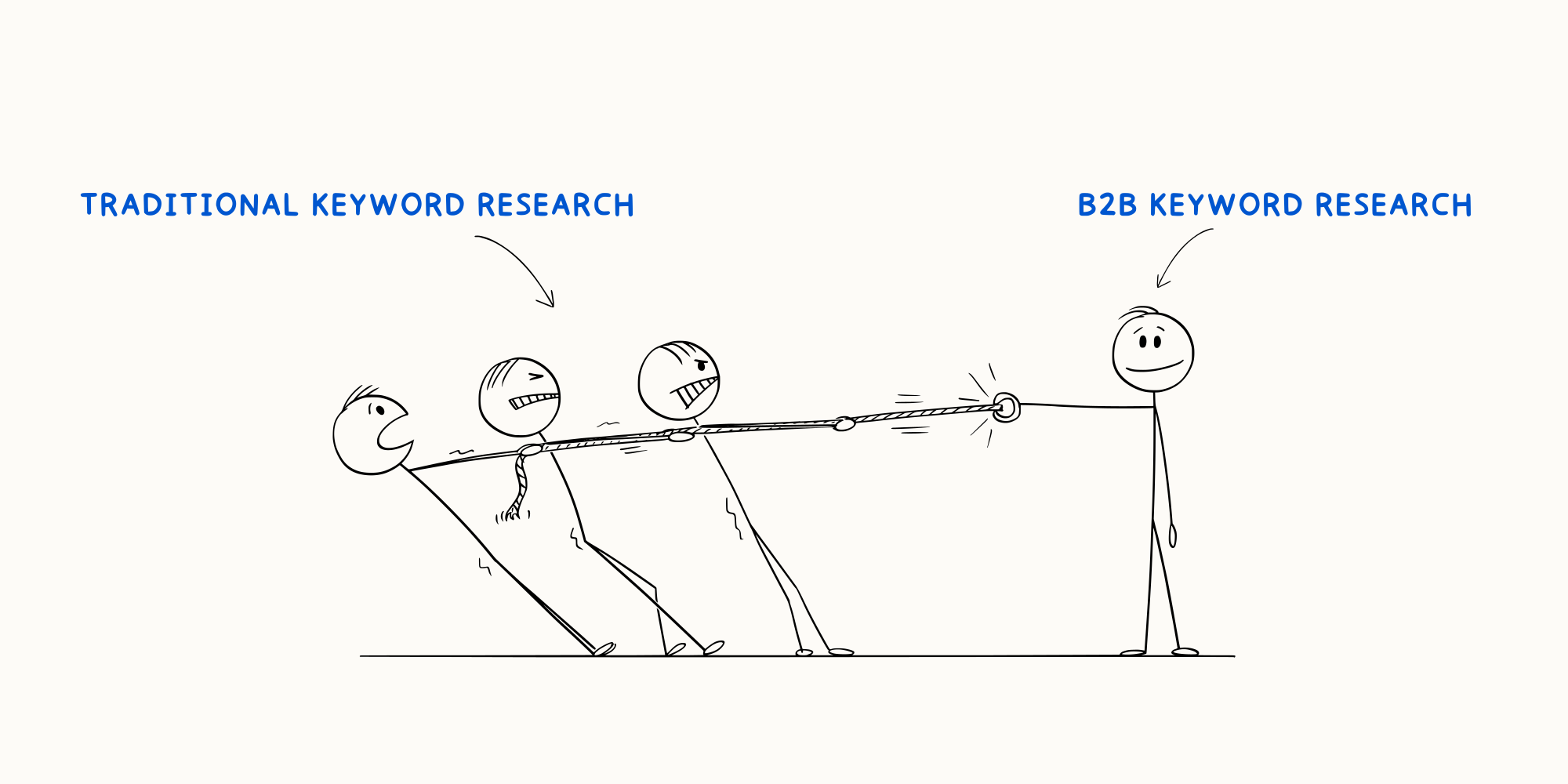

B2B teams often follow the same keyword research routine. They open a tool, type in a broad phrase, sort by search volume, export a spreadsheet and hand it off like a finished plan.
It feels structured and organised.
But once the content goes live, the cracks show quickly. Traffic rises, impressions climb and a few rankings look promising — yet the pipeline barely moves.
The leads don’t match the audience the sales team wants. The content brings in readers, not buyers. And the strategy that looked solid on paper produces little in reality.
This isn’t a minor flaw.
It’s a fundamental failing of keyword research that wasn’t built for B2B buying behaviour.
Traditional keyword research works fine for consumer markets. It breaks down the moment you apply it to complex, multi-stakeholder decisions. Let’s walk through why — and what needs to change.
Traditional B2B keyword research treats every searcher the same
Most teams evaluate keywords based on three basic factors: search volume, ranking difficulty and the pages sitting on page one. What rarely gets considered is the single most important question in B2B:
“Was the person who typed this keyword ever going to buy something?”
In B2B, most broad keywords pull in people with no authority, no budget and no urgent need. Students. Interns. Curious readers. People trying to understand an industry, not evaluate a solution.
You can rank well for these terms and still generate nothing meaningful.
That’s where traditional keyword research starts to fall apart.
Volume-first tools reward the wrong keywords
SEO tools heavily favour volume. If more people search for a keyword, the tool pushes it to the top. The assumption is that more volume equals more opportunity.
B2B buying doesn’t follow that logic.
High search volume rarely reflects high commercial intent. It only reflects widespread curiosity. Meanwhile, the keywords that real buyers use — the ones tied to workflow problems, compliance issues or operational pain — are often low-volume, messy and impossible for tools to cluster neatly.
Most teams skip these terms because they look insignificant. In reality, they often drive the best leads.
B2B buyers search differently
Consumer searches are simple. B2B searches are layered. Buyers search according to pain, not terminology — and their phrases rarely look like standard keywords.
Someone doesn’t search for “inventory management system.” They search for “inventory tracking for multiple warehouses” or “batch tracking for food manufacturing.”
They don’t type “project management tool.” They type “project management for teams working asynchronously” or “task tracking for creative agencies.”
These searches appear scattered.
They look insignificant.
They rarely show volume in tools.
Yet they’re used far more often by decision-makers who are close to choosing a solution.
Traditional keyword research ignores the buying stage
B2B buying isn’t linear. People move through stages: identifying a problem, diagnosing it, researching categories, comparing vendors and then internally justifying a final choice.
Traditional keyword research focuses almost entirely on the first stage — broad informational queries. These searches bring in readers, not prospects.
Mid-funnel and bottom-funnel searches rarely have high volume. They often look oddly specific. But they carry the strongest commercial intent.
When teams ignore these deeper queries, they end up building content for curiosity, not conversion.
Many strategies start by exporting a competitor’s ranking keywords. The assumption is simple: if a competitor ranks for it, it must be valuable.
There’s a flaw in that logic. Competitors aren’t necessarily strategic.
They might be ranking for topics that don’t convert at all.
Copying their keywords means copying their mistakes. You inherit the same low-intent traffic, the same unqualified readers and the same illusion of progress.
Competitor data is helpful — but it should never lead. At best, it’s a reference point.
Keyword tools can’t see your differentiators
Effective B2B keyword research starts with what makes your product unique. That includes:
- specific workflows you support
- industries where your offer performs best
- problems your customers consistently mention
- features competitors lack
- reasons people switch to you
None of this shows up in a keyword tool.
Tools don’t know what buyers say during sales calls. They don’t understand the friction found in onboarding. They don’t track the patterns your support team hears every week.
These details create the strongest keywords — and most of them never appear in standard reports.
Traditional keyword research doesn’t map to revenue
It’s common for teams to track traffic, impressions and rankings. Far fewer teams track which keywords generate:
- demos
- qualified leads
- pipeline movement
- closed-won deals
Without that connection, it’s impossible to distinguish between “successful content” and “content that looks successful.”
Volume does not equal value.
Meaningful behaviour equals value.
A better model for B2B SEO keyword research
A revenue-focused keyword strategy looks nothing like traditional keyword research. It prioritises the language buyers actually use and the moments where decisions are shaped.
1. Use customer conversations as your primary source
Sales calls and support tickets reveal real search language. These phrases tend to outperform tool-generated keywords because they reflect actual problems, not theoretical topics.
2. Build your keyword list around pain, not popularity
Searches rooted in operational frustration carry more intent than broad topic searches. They demonstrate urgency and often lead directly to vendor evaluation.
3. Prioritise industry and workflow specificity
Modifiers like industry, role or workflow convert significantly better than broad terms. They attract fewer people, but almost every visitor is a potential customer.
4. Include switching-intent keywords
Terms like <competitor> alternative or <competitor> vs <competitor> appear late in the buying cycle and often produce the highest quality leads.
5. Target mid-funnel clarity queries
These searches combine a solution with a specific operational need. They rarely appear in large volumes but demonstrate deep, buyer-level intent.
Final thoughts
Traditional keyword research rewards scale, not precision. That works in consumer markets. It doesn’t work when purchasing decisions are complex, expensive and tied to specific workflows.
B2B keyword research only works when it starts with the buyer. Their frustrations. Their language. Their internal processes. Their moments of friction.
The most valuable keywords you’ll ever target won’t come from a tool. They’ll come from understanding your customers better than everyone else.
