How to find and use long-tail keywords

Written by Aggée Kimpiab
8+ years of SEO experience. Started out machining steel on the factory floor before moving into SEO. Now works with manufacturers, ecommerce brands, and B2B companies on organic growth. Case studies: Lawton Tubes and MoverX.
Table of Contents
Type shoes into Google and you’re competing with every shoe retailer on earth. Type best waterproof trail running shoes for wide feet and you’re competing with almost nobody, and the person searching it is a lot closer to buying.
That’s the entire case for long-tail keywords in one comparison. They’re longer, more specific search phrases, usually three or more words, and individually they get a fraction of the traffic that a broad “head” term gets. But there are vastly more of them, the competition for each one is far lower, and the person typing one in usually knows exactly what they want.
What a long-tail keyword actually is #
A head term is short, broad, and brutally competitive: shoes, SEO agency, coffee maker. A long-tail keyword is the specific version of that same search: SEO agency for personal injury lawyers, best coffee maker for a studio apartment.
Neither is inherently better. Head terms carry more total volume and more brand-building visibility. Long-tail terms convert better, rank faster because there’s less competition, and let you build content around exactly what a specific type of customer is actually looking for. Most sites that win at SEO win by dominating a large number of long-tail terms rather than by out-muscling everyone for the head term.
Practical tool
Watch a head term branch into long-tail
Why long-tail keywords matter #
Lower competition. Fewer sites are targeting the specific phrase, so a smaller, newer, or less authoritative site can realistically rank for it.
Higher intent. Someone searching a five-word phrase usually knows precisely what they want. That’s a warmer lead than someone typing a single generic word.
Compounding volume. Individually small, but there are far more long-tail searches happening than head-term searches. A page built around ten specific long-tail phrases can out-perform one built around a single head term.
Content you can actually write well. It’s far easier to write something genuinely useful about “SEO agency for personal injury lawyers” than to write something generic enough to serve everyone searching “SEO agency.”
Where to actually find long-tail keywords #
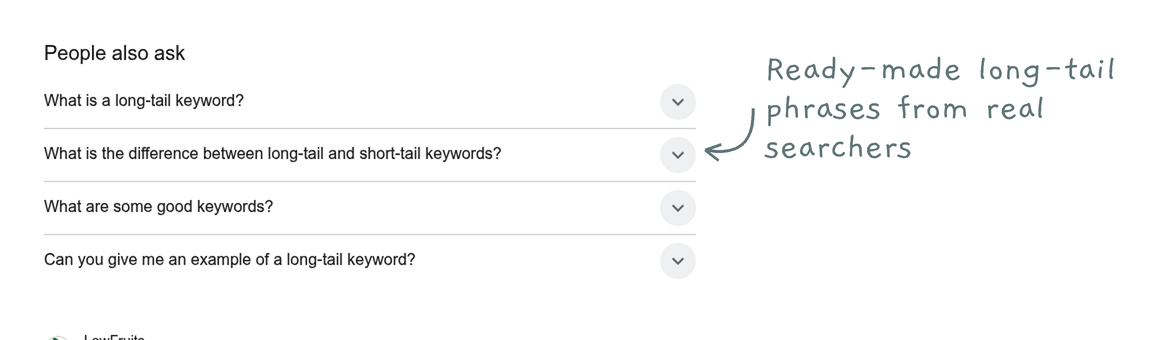
You don’t need an expensive tool to start. Most of the best long-tail phrases are sitting in places you already have access to.
Practical tool
Five places to find long-tail keywords
Match the content to the intent #
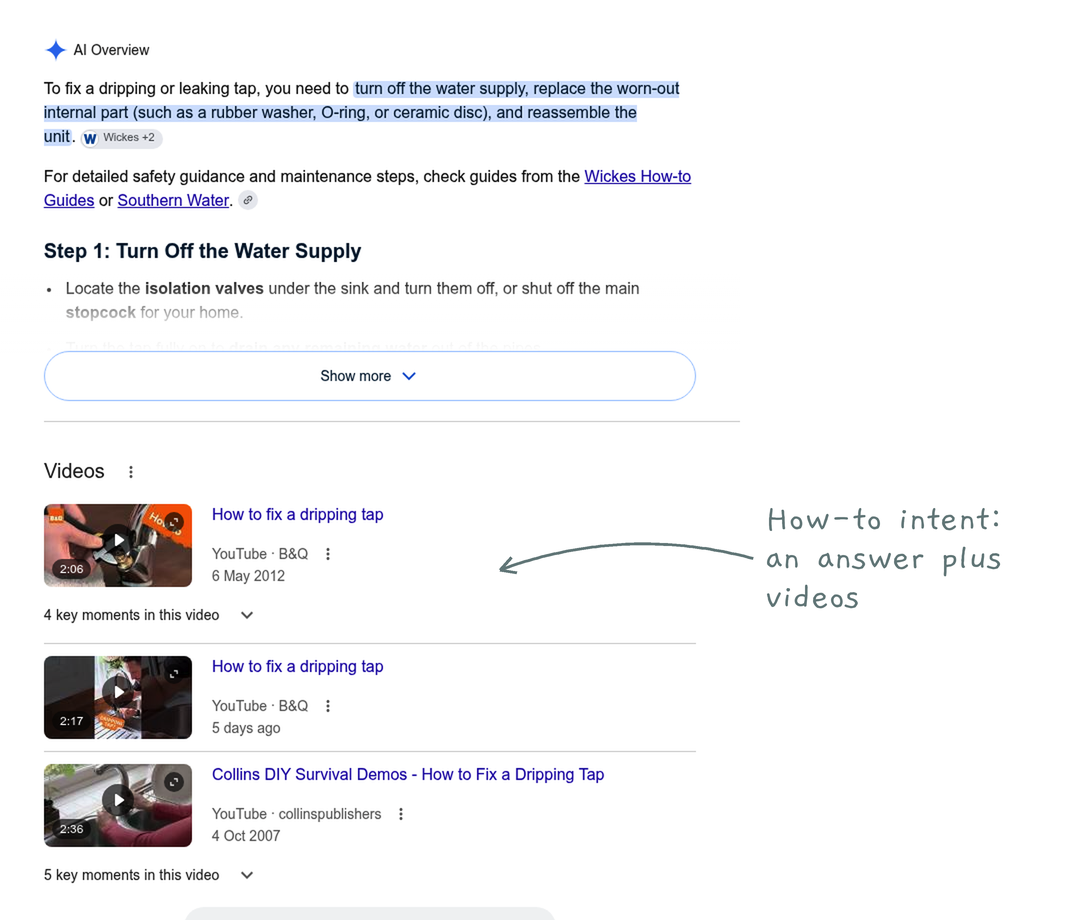
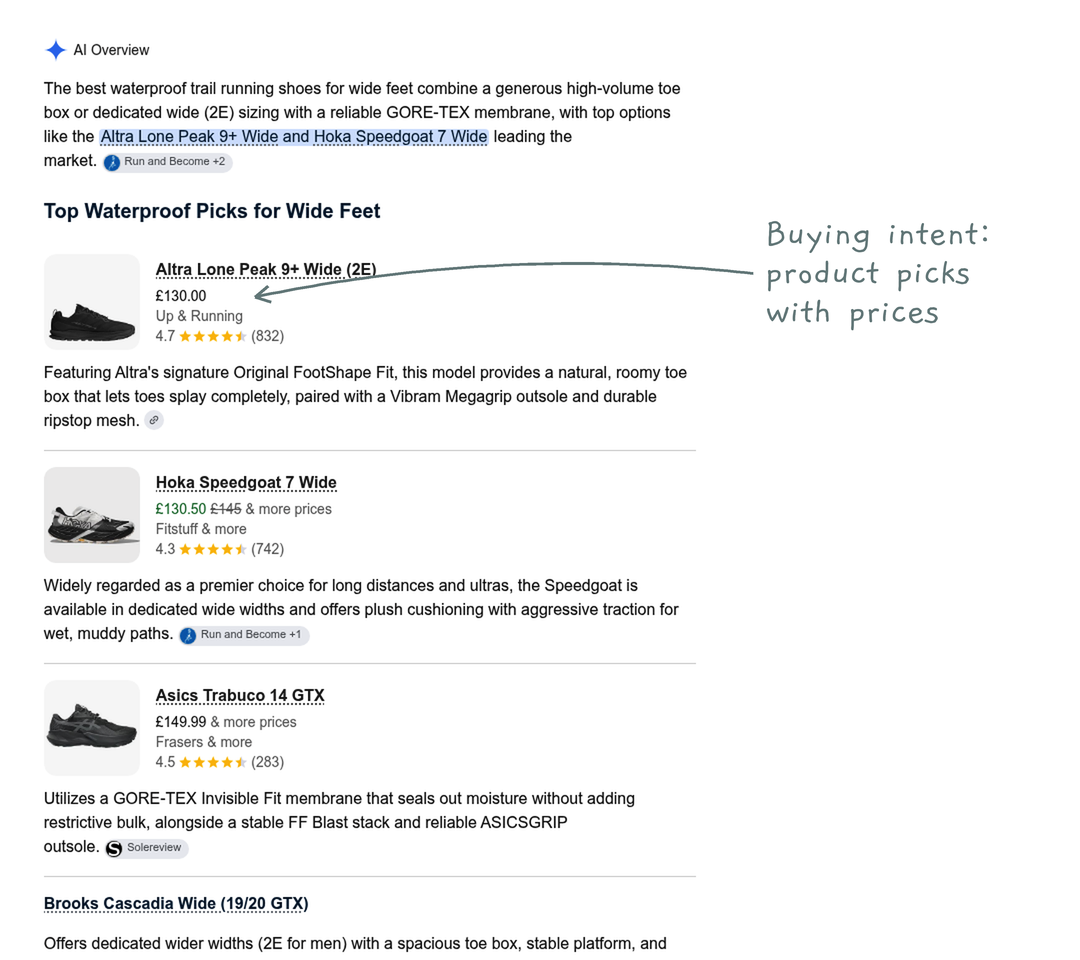
Not every long-tail phrase wants the same kind of page. Building a product page for a question-shaped query, or a blog post for a buyer who’s ready to purchase, is a mismatch that costs you the ranking even if the keyword itself was a good pick.
Practical tool
What does this long-tail query actually want?
Build content around clusters instead of single pages #
The mistake most sites make is publishing one page per long-tail phrase with no relationship between them. The stronger approach is a hub-and-spoke structure: one broad pillar page covering the head term, linking out to multiple specific spoke pages that each go deep on one long-tail variation, and linking back to the pillar.
This does two things. It gives searchers on specific long-tail queries a page written just for them, and it gives the pillar page the topical authority that comes from being surrounded by genuinely thorough supporting content, rather than trying to cram everything into one page that serves no one particularly well.
A working example: a pillar page on “running shoes” links out to spoke pages on “best running shoes for flat feet,” “best running shoes for wide feet,” and “best waterproof trail running shoes,” each of which links back to the pillar and sideways to each other where relevant.
On-page basics for long-tail content #
Use the phrase naturally in the title and first paragraph. Not stuffed in, just present, the same way you’d naturally answer the question if someone asked you directly.
Answer the specific question the phrase implies. A page targeting “best coffee maker for a studio apartment” should talk about counter space and single-serve options, going deeper than a generic “best coffee makers” list with the intro edited.
Cover related long-tail variations in the same page where they genuinely belong, rather than spinning up a near-duplicate page for every minor phrasing difference.
Keep it genuinely useful. Long-tail content ranks well partly because it’s usually easier to make it excellent, there’s less competing for attention with a broad, shallow head-term page. Don’t waste that advantage with thin content.
Common long-tail mistakes #
Keyword stuffing the exact phrase everywhere. Modern search doesn’t need it, and it reads badly to an actual human.
One page trying to rank for ten unrelated long-tail phrases. Split them out, or accept the page will rank weakly for all of them instead of strongly for one.
Ignoring search volume entirely. Some long-tail phrases genuinely get searched by nobody. Low competition on a phrase nobody searches is still worth nothing.
Treating every long-tail page as disposable content. The best-performing long-tail pages get the same care as your best content, they’re just narrower in scope.
Long-tail keyword checklist #
Twelve items, grouped by stage. Check them off as you go, your progress is saved in your browser.
Practical tool
0 / 12 done
Finding phrases
Validating them
Structuring content
On-page
60-second self-check #
Answer honestly. This runs entirely in your browser, nothing is sent anywhere.
60-second self-check
Is your content actually built around long-tail search?
If working through this raised more questions than it answered, that’s normal, keyword strategy has a lot of moving parts. Get in touch and I’ll give you a straight answer about where your specific situation stands.
Related reading: How to build your keyword strategy · Bottom-of-funnel SEO keywords · B2B keyword research · Do SEO keywords need to be exact? · How many SEO keywords should your page target?