How to build links that actually help your SEO

Written by Aggée Kimpiab
8+ years of SEO experience. Started out machining steel on the factory floor before moving into SEO. Now works with manufacturers, ecommerce brands, and B2B companies on organic growth. Case studies: Lawton Tubes and MoverX.
Table of Contents
Type buy backlinks into Google and you’ll find no shortage of people willing to sell you a hundred links for fifty pounds. Almost none of it works, and a meaningful chunk of it actively hurts you.
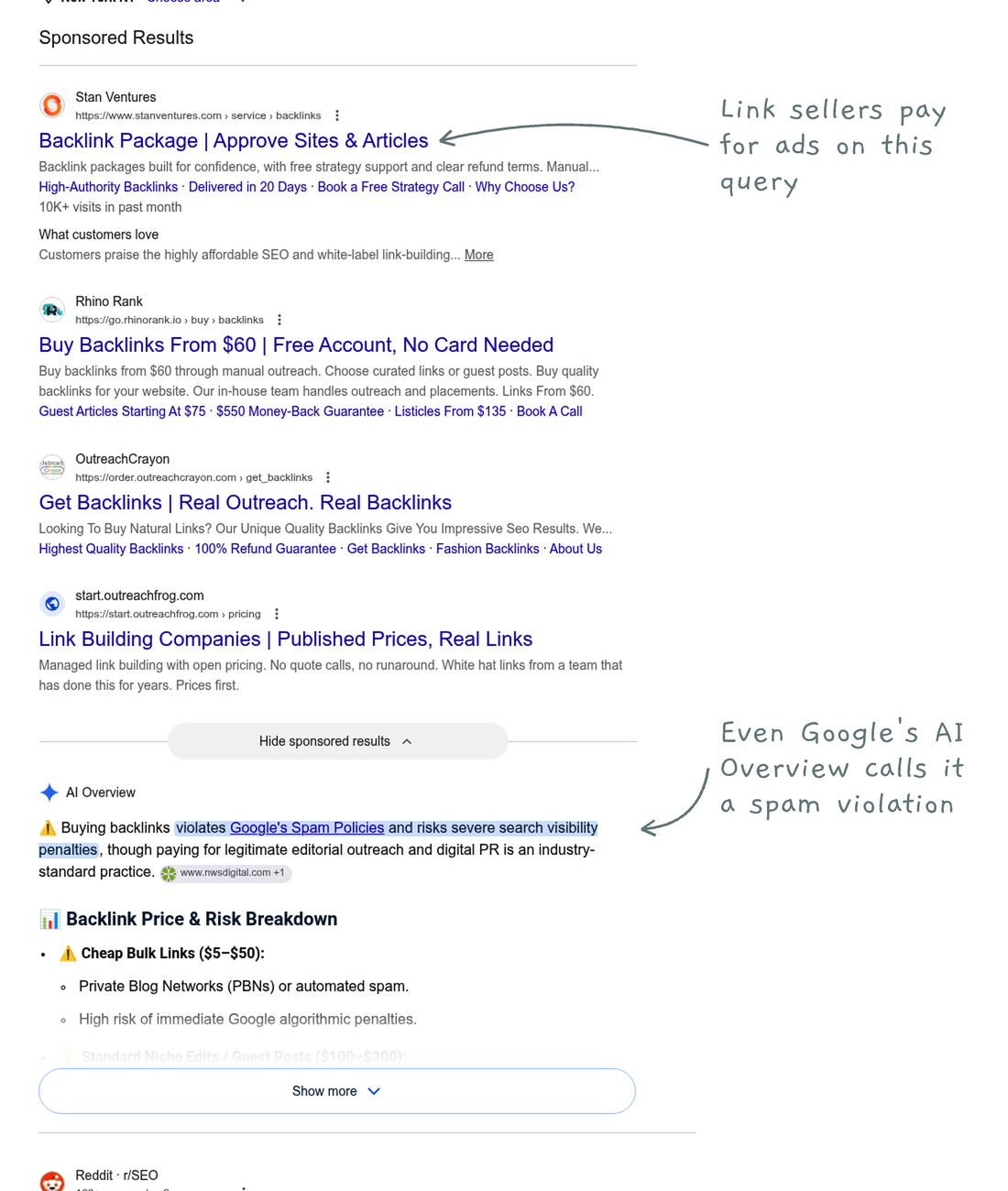
Links are still one of the strongest ranking signals Google uses, they’re essentially a vote of confidence from one site to another. But the version of link building that moves rankings looks nothing like the version being sold in bulk. This guide covers what actually holds up.
What a link is actually doing for you #
A link from another site tells Google (and readers) “this page is worth pointing people to.” Google weighs that vote based on the linking site’s own authority, how relevant it is to your topic, and whether it looks earned rather than manufactured.
Authority isn’t everything. A relevant link from a smaller, on-topic site regularly outperforms an irrelevant link from a huge one. A gardening blog linking to your plumbing site doesn’t carry the weight it would coming from a home-improvement site, no matter how big the gardening blog is.
Placement matters. An editorial link inside the body of a genuinely relevant article carries more weight than the same link buried in a footer or a sidebar “resources” list nobody reads.
Practical tool
Worth pursuing, or worth avoiding?
Tactics that actually work #
Broken link building. Find a dead link on a genuinely relevant page, and offer your own working, useful page as a replacement. It’s a real favour to the site owner, more than a favour you’re asking for.
Digital PR and original data. Run a small survey, pull an interesting stat from your own data, or take a clear stance on something in your industry. Journalists and bloggers link to sources, rather than sales pages.
Resource page link building. Plenty of sites maintain a curated “useful links” or “resources” page in your niche. If you’ve genuinely got something worth including, ask.
Unlinked mentions. Search for your brand name without a link attached. Someone’s already mentioned you, you’re just asking them to make it clickable, which is a much easier ask than a cold pitch.
Genuine relationships. Suppliers, partners, past clients, and industry contacts will often link to you if asked directly and given a real reason, far more reliably than a stranger you’ve never spoken to.
Practical tool
Which tactic fits what you've got?
What to avoid #
Buying links in bulk. Google’s guidelines explicitly cover paid links, and mass-purchased links are usually easy for their systems to spot as a pattern.
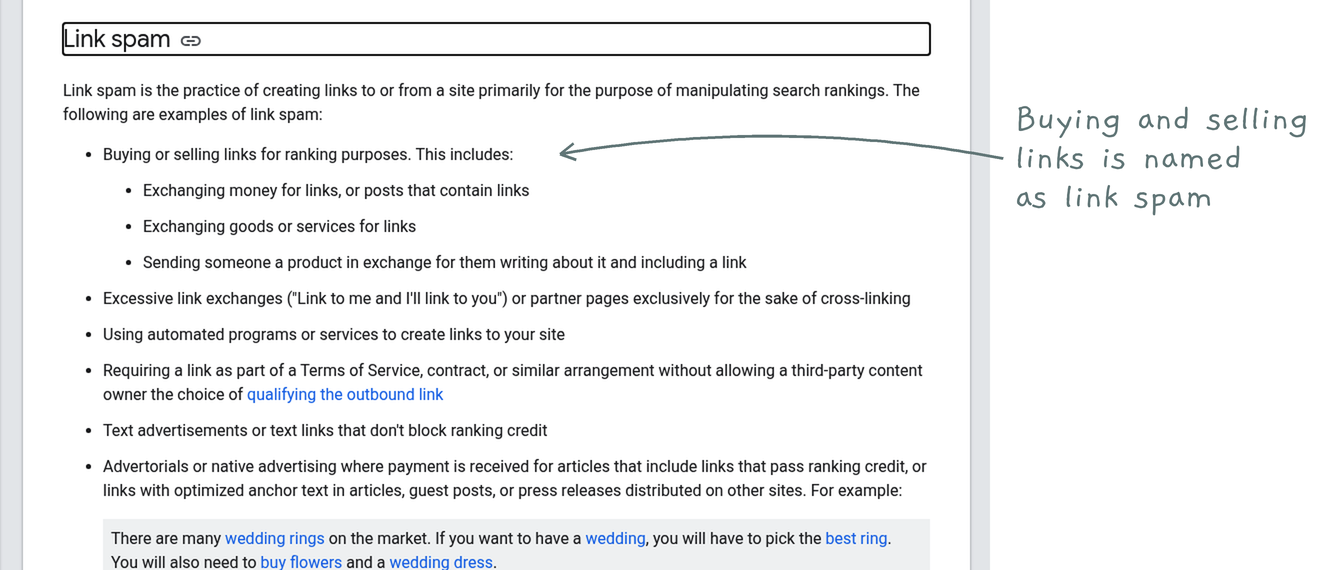
Private blog networks (PBNs). Networks of sites built purely to link to each other. High risk, and the sites tend to get deindexed, taking your links down with them.
Reciprocal link exchanges at scale. A handful of genuine, relevant reciprocal links between real partners is fine. Fifty unrelated sites all linking to each other in a ring is a pattern, and patterns get caught.
Over-optimised anchor text. If every link to your plumbing site uses the exact phrase “best emergency plumber London,” that consistency looks manufactured rather than earned. Natural link profiles have a mix: your brand name, your URL, generic phrases like “this guide,” and occasionally an exact-match keyword.
Practical tool
What does a healthy anchor text mix look like?
How to evaluate a link opportunity #
Before you spend time pursuing a link, or accept an offer to place one, ask:
Would a real reader land on that linking page and find it useful? If the answer’s no, the link’s value to Google is questionable too.
Is the site actually about something? Real content, real traffic, a real audience, the opposite of fifty thin pages built purely to host outbound links.
Is it relevant to your industry? Relevance consistently outperforms raw authority.
Would you be comfortable if your competitor saw exactly how you got this link? If the honest answer is “not really,” that’s usually a sign.
Link building checklist #
Twelve items. Check them off as you go, your progress is saved in your browser.
Practical tool
0 / 12 done
Foundations
Outreach
Quality control
Ongoing
If you’d rather have someone vet the link building already happening on your behalf, or build the campaign from scratch, get in touch and I’ll take an honest look.
Related reading: How to check if your SEO consultant’s link building is safe · Crash course to SEO internal linking